
Blog
Industry trends, technical insights, and company news from the world of heat exchanger tubes and plates.

COPPER TRENDS 2025: Understanding Value, Scarcity, and the Road Ahead
Copper prices remain elevated due to tight supply, mine disruptions, smelter bottlenecks, and geopolitically distorted trade flows. Demand continues to accelerate, driven by the energy transition, data-center expansion, and strong consumption from the US and India....
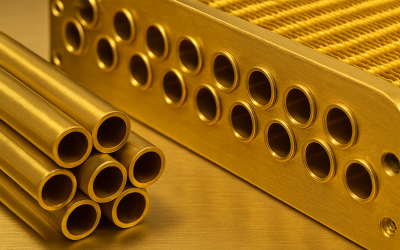
Aluminum Brass: Composition, Properties, and Applications
Aluminum brass (UNS C68700) is a copper-zinc alloy with 1.8–2.5% aluminum and 0.02–0.06% arsenic, conforming to ASTM B111 The aluminum addition forms a self-healing oxide film that resists impingement attack in high-velocity seawater C68700 outperforms admiralty brass...
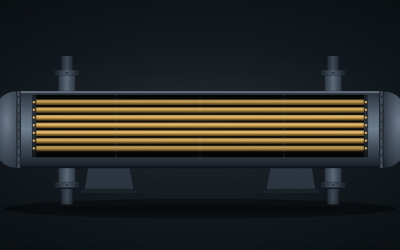
Heat exchanger maintenance: a practical guide for engineers
Heat exchanger maintenance is the difference between a unit that meets its design duty for 20 plus years and one that loses 15 to 30 percent of its capacity within a few cycles. The work breaks down into four disciplines: monitor performance against baseline, inspect...
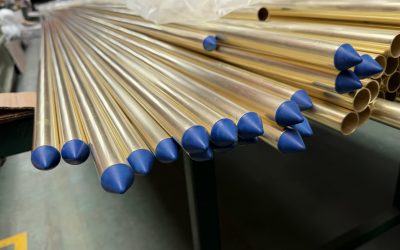
Case Study: Condenser Retubing Project for Embalse Nuclear Power Plant
Admiralty Industries executed a nuclear-grade condenser retubing project with full process validation, ensuring consistency across high-volume production. A structured approach combining pre-production qualification, controlled manufacturing, and continuous client...
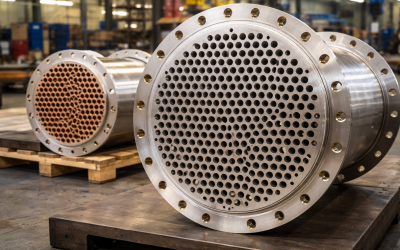
What Is a Tubesheet in a Heat Exchanger? Design, Materials, and Common Failures
A tubesheet is the structural plate that holds and seals heat exchanger tubes It ensures fluid separation and acts as a pressure boundary Material selection is critical to prevent corrosion and failure Common issues include corrosion, galvanic damage, and joint...
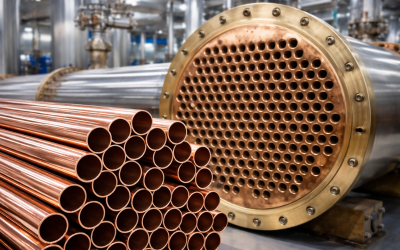
How to Select the Right Heat Exchanger Tube Material
Heat exchanger tube materials must balance thermal conductivity, corrosion resistance, and mechanical strength. Copper alloys are widely used in power plants, marine cooling systems, desalination plants, and industrial heat exchangers. Aluminum brass and copper-nickel...
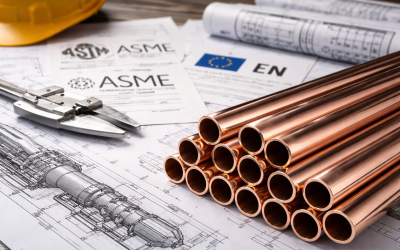
ASTM, ASME, and EN standards in heat exchanger projects
ASTM, ASME, and EN standards define material properties, inspection requirements, and documentation for industrial tubing. In regulated sectors such as power, petrochemical, and marine, compliance with the correct standard determines project approval and inspection...
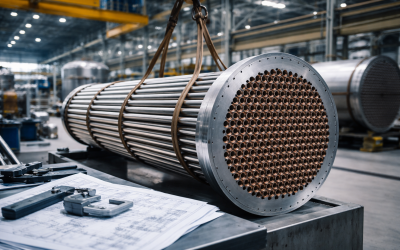
Why choosing a specialized trading partner makes the difference
In critical industrial projects, choosing a specialized trading partner is a risk management decision, not a commercial shortcut. A technically competent supply partner understands standards, inspection requirements, and manufacturing constraints, ensuring alignment...
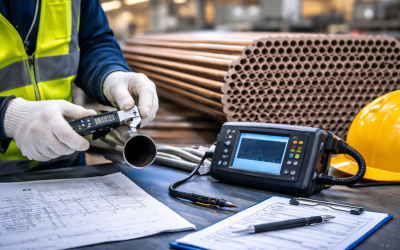
Why inspection failures matter in industrial projects
Heat exchanger tubes often fail inspection due to specification gaps, testing and acceptance mismatches, or incomplete traceability documentation. Preventing rework starts before manufacturing with clear requirements, agreed inspection methods, and controlled...
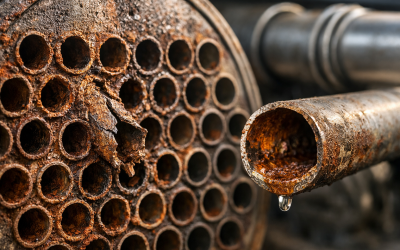
Common Heat Exchanger Tube Failure Modes: Corrosion, Leaks, and Material Selection
Heat exchanger tube failures are most commonly caused by corrosion, erosion, and incorrect material selection. Understanding failure modes such as dezincification, galvanic corrosion, and wall thinning helps engineers and buyers choose the right tube material and...
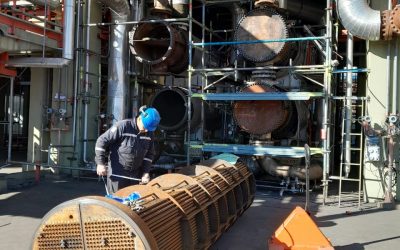
CASE STUDY: Multilayer Closure Disk for a Critical Refinery Heat Exchanger
Admiralty Industries delivers engineered heat exchanger components aligned with the tight timelines and risk profile of refinery turnarounds. In house control of materials, overlays, and quality verification enables reliable execution of complex multilayer solutions....